Are You Missing Key Family Tax Opportunities?
Family-focused tax rules exist throughout the tax code, but they do not apply themselves. Filing status, income thresholds, and credit eligibility must line up for those opportunities to appear on your return.

Below is a practical breakdown of how family tax rules work, which opportunities tend to matter most, and where families commonly miss them. Understanding these rules helps reduce unnecessary taxes and avoid preventable surprises.
See how a Virtual Family Office can reduce fees and taxes
Start With Filing Status
Filing status is one of the most important decisions on your return. It sets your tax brackets, standard deduction, and eligibility for many credits. Choosing incorrectly can limit benefits before you even reach the credit section of the return.
Families typically fall into one of four categories: married filing jointly, married filing separately, head of household, or qualifying widow or widower. Each has advantages and limitations. The right choice depends on income structure, dependents, and household support.
Married Filing Jointly
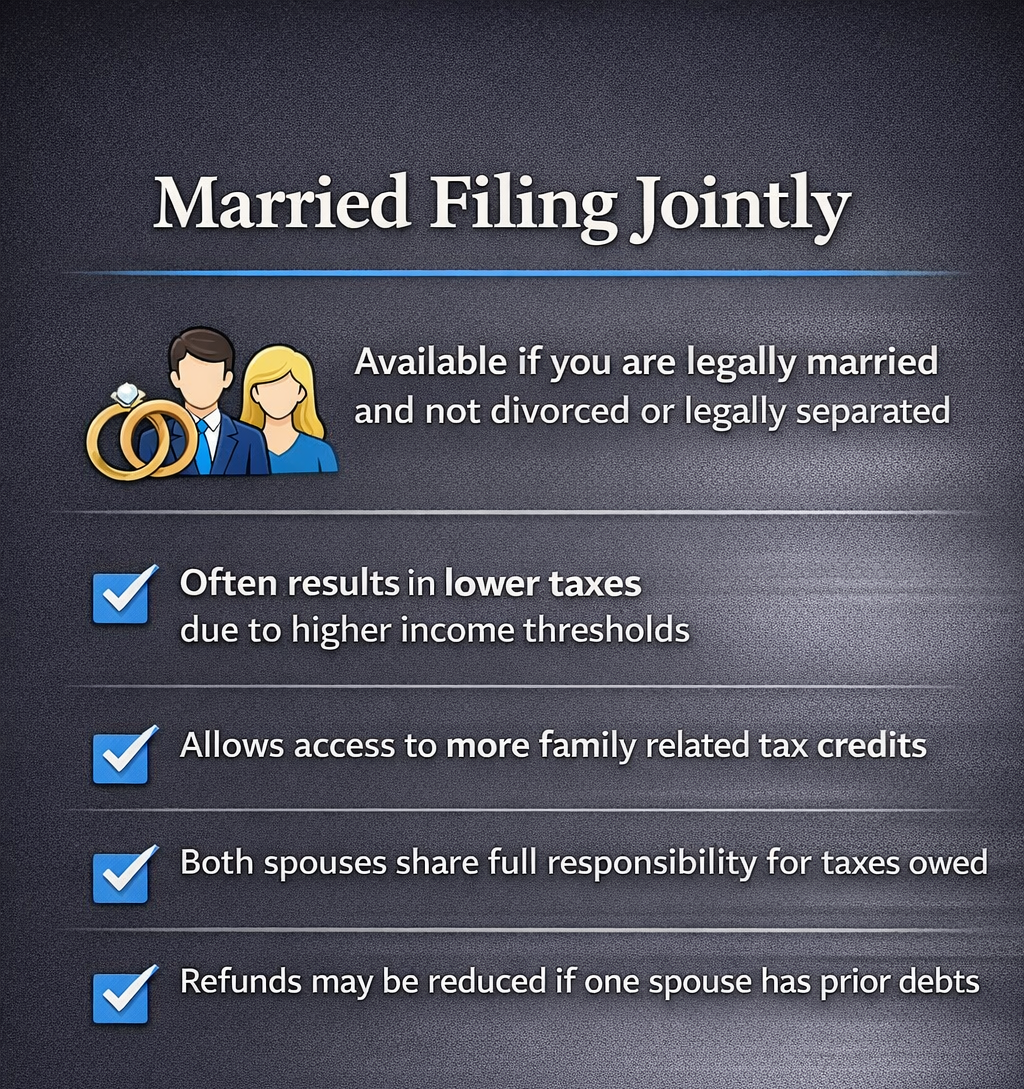
For many married couples, filing jointly produces the lowest overall tax bill. Income thresholds for higher tax brackets are wider, and access to family-related credits is broader.
The tradeoff is shared responsibility. Both spouses are fully liable for the return. If one spouse has prior tax debt or unresolved obligations, refunds can be reduced. This risk does not always outweigh the tax savings, but it should be evaluated intentionally.
Married Filing Separately
Filing separately can feel safer when finances are not fully shared. It limits exposure to a spouse’s tax or debt issues, but often increases total taxes.
Many family-focused credits are reduced or unavailable under this status. Education credits, adoption credits, and dependent care benefits are commonly lost. In most cases, filing separately is a defensive move, not a tax-efficient one.
Head of Household
Head-of-household status is often missed by eligible taxpayers. It is designed to support unmarried individuals who provide significant household support for a dependent.
When used correctly, it offers lower tax rates and more generous income thresholds than single filing. For single parents and caregivers, this status can materially reduce taxes without changing income.
See how a Virtual Family Office can reduce fees and taxes
Qualifying Widow or Widower
This status applies for up to two years following a spouse’s death when a dependent child is present. It allows continued access to many benefits associated with joint filing.
The intent is stability during a transition period. After the eligibility window ends, filing strategy should be reviewed to avoid an unexpected tax increase.
Tax Credits Make the Real Difference
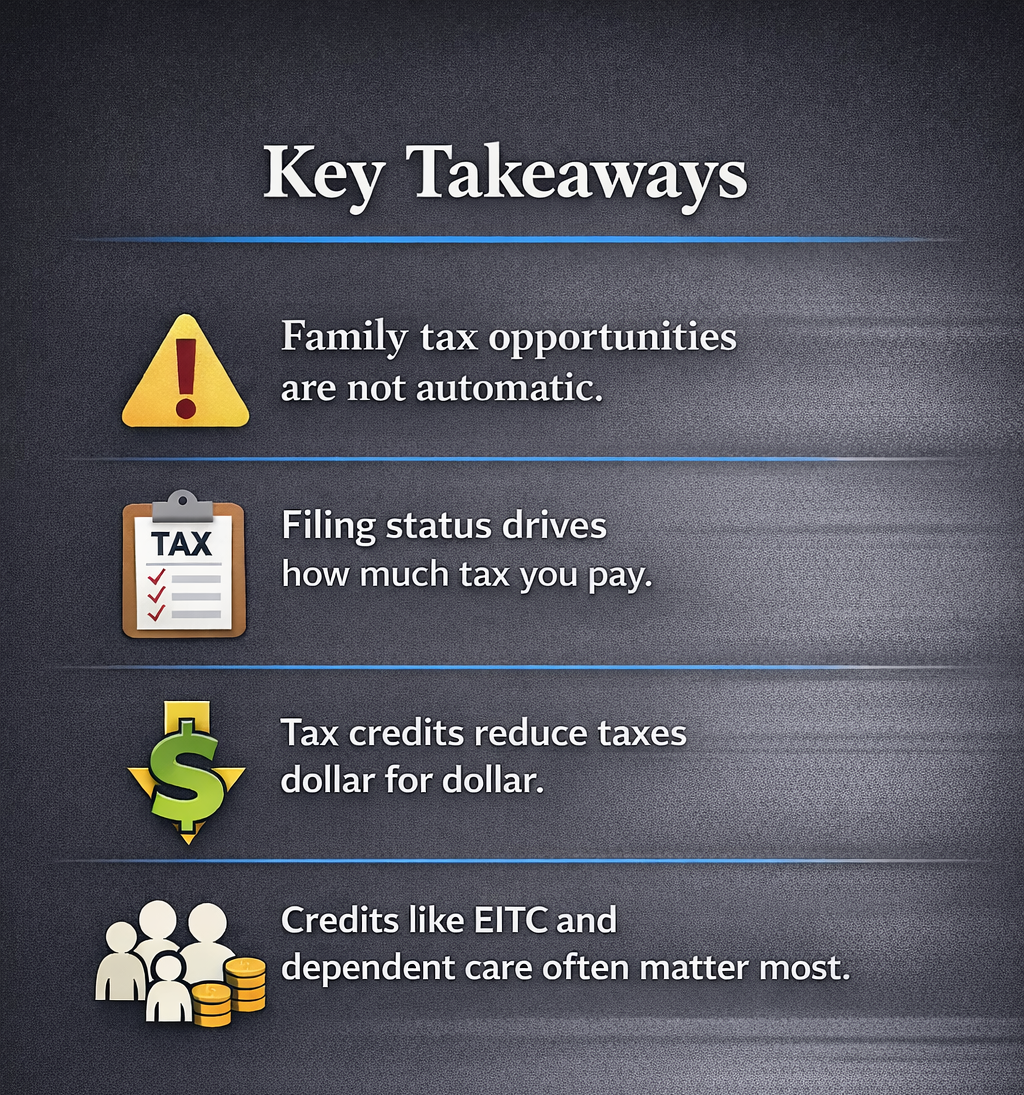
Deductions reduce taxable income. Credits reduce taxes owed dollar-for-dollar. For families, credits often drive the largest savings.
Eligibility depends on income, filing status, and dependent rules. Missing one credit can undo the benefits of an otherwise well-structured return.
Earned Income Tax Credit
The Earned Income Tax Credit supports working households with lower to moderate incomes. The credit increases with qualifying dependents and varies by filing status.
Families do not need children to qualify, but income limits are stricter without them. For those who qualify, the credit can generate a refund even if no federal tax is owed.
Child Tax Credit
The Child Tax Credit helps offset the cost of raising children. To qualify, the child must meet age, residency, and support tests and have a valid Social Security number.
A portion of the credit may be refundable through the Additional Child Tax Credit. Income thresholds apply, but partial credits may still be available at higher income levels.
Child and Dependent Care Credit
This credit applies when care expenses allow parents or caregivers to work. Eligible costs include daycare, preschool, and after-school programs.
The care must be work-related and provided by someone who is not a spouse or dependent. Married couples generally must file jointly to qualify. Coordination with employer-dependent care benefits may also apply.
Adoption Tax Credit
Families who adopt may qualify for a significant tax credit covering adoption-related expenses. Eligible costs include legal fees, travel, and court expenses.
If the credit cannot be fully used in one year, unused amounts may carry forward. Income limits apply, but they are relatively high compared to other credits..
Deciding Who Claims Dependents
Only one taxpayer can claim a dependent per year. This affects credits, filing status, and refund eligibility.
For divorced or separated parents, IRS tie-breaker rules apply. The dependent generally goes to the parent with whom the child lived the most during the year. When time is equal, the higher-income parent typically claims the child.
Income Thresholds Are Not One Size Fits All
There is no single income level where families suddenly owe tax. Liability depends on filing status, dependents, deductions, and credits working together.
Standard deductions shield a portion of income. Credits can reduce taxes further or create refunds. Planning focuses on how these pieces interact over time, not just in one filing year.
Why Family Tax Planning Matters
Family-related tax benefits are generous, but the rules are layered. Filing errors often lead to missed credits or delayed refunds.
More importantly, taxes do not exist in isolation. Filing status, income timing, and withdrawals all interact with long-term financial planning. Addressing these decisions proactively reduces surprises and improves efficiency.
How ONE Advisory Partners Helps You
When family finances become more complex, decisions often feel heavier. At ONE Advisory Partners, Scott A. Rojas helps families bring clarity to those moving parts. He focuses on how taxes, cash flow, investments, and long-term goals connect across different stages of family life.
Scott works with families to coordinate planning decisions so nothing operates in isolation. From filing status and tax-aware strategies to retirement income and legacy planning, his approach emphasizes structure and foresight. The goal is not short-term optimization, but helping families make confident decisions that support stability, flexibility, and long-term direction.
Bottom Line
Family tax benefits work best when decisions are made intentionally. Filing status, income levels, and credits must align for the rules to work in your favor.
When those decisions are coordinated, taxes become more predictable and manageable. The result is not complexity. It is clarity and control.
See how a Virtual Family Office can reduce fees and taxes
Common Questions About Family Taxes
What are family tax breaks?
Family tax breaks are tax credits, deductions, and filing status rules designed to lower taxes for households supporting children or dependents.
Are family tax breaks applied automatically?
No. Family tax breaks require the correct filing status, dependent classification, and income thresholds to be met. If those do not align, the benefits do not appear on your return.
Which filing status helps families most?
Many married couples benefit from married filing jointly, while unmarried parents may qualify for head of household, which often results in lower taxes.
What tax credits matter most for families?
The most impactful family tax credits often include the Child Tax Credit, Earned Income Tax Credit, child and dependent care credit, and adoption tax credit.
How can families avoid missing tax breaks?
Families avoid missed tax breaks by reviewing filing status annually, coordinating dependent claims, and aligning tax decisions with their broader financial plan.
Reference
Investopedia. (n.d.). Family tax tips. Retrieved from https://www.investopedia.com/family-tax-tips-8709018
Internal Revenue Service. (n.d.). Child Tax Credit. Retrieved from https://www.irs.gov/credits-deductions/individuals/child-tax-credit
Internal Revenue Service. (n.d.). Earned income and Earned Income Tax Credit (EITC) tables. Retrieved from https://www.irs.gov/credits-deductions/individuals/earned-income-tax-credit/earned-income-and-earned-income-tax-credit-eitc-tables
Internal Revenue Service. (n.d.). Publication 501: Dependents, standard deduction, and filing information. Retrieved from https://www.irs.gov/pub/irs-pdf/p501.pdf