The Retirement Plan Every Lawyer Needs to Start Now
Retirement planning matters for every lawyer, no matter your age. You may be in your 60s and thinking about stepping back. You may be in your 50s and starting to picture what comes next. Even lawyers in midcareer benefit from thinking ahead.

This article walks through why lawyers avoid retirement planning, the options available to you, and the practical steps that help you build a secure and meaningful life after practice.
Why Lawyers Often Delay Planning
Many lawyers put off retirement planning.
The law keeps you busy. Between cases, clients and court deadlines it is hard to find time for long-term planning.
Your identity ties into practice. You invest years building reputation, serving clients and shaping cases. Quitting feels like losing part of yourself.
Retirement feels uncertain. You may worry about running out of money or losing purpose. That uncertainty pushes planning aside.
Because of that hesitancy many lawyers reach retirement unprepared.
Reasons Retirement Can Happen Sooner Than Planned
You may intend to work well into your late sixties or beyond, but retirement does not always follow your preferred timeline. Several factors can pull that decision forward, even if you feel prepared to continue practicing. Understanding these risks helps you build a retirement plan that protects you rather than surprises you.
Health issues
Health can change without warning. You may face a sudden diagnosis, a long recovery, or a gradual decline that affects your ability to manage the pace of legal work. You may also need to care for a spouse, partner, parent, or family member whose health limits your availability. When health becomes a priority, retirement can move from optional to necessary.
Economic changes
The legal market shifts quickly. Clients may retire, merge, reduce legal spending, or move their work in-house. Firms may downsize, restructure practice groups, or reduce senior roles. Even solo practitioners can feel the impact when long-term clients leave or entire industries slow down. These changes can reduce income, strain cash flow, and make continued practice less stable.
Practice fatigue and burnout
Law is demanding. Many attorneys reach a stage where the pressure, deadlines, and emotional workload begin to outweigh the satisfaction. You may still enjoy the intellectual side of the law but feel drained by the pace, the hours, or the expectations. Burnout can build slowly, making it harder to deliver the level of work you expect from yourself.
Declining interest in firm life
Some lawyers simply lose the desire to manage staff, billing, conflict, and the daily push of a practice. You may want more personal time, more travel, or more freedom from a structured schedule. This shift happens naturally after decades in the profession.
These factors remind you that retirement planning works best as a form of protection. It gives you choices even when circumstances change. A strong plan supports you in difficult moments and allows you to transition on your own terms instead of reacting to events you cannot control.
What Retirement Looks Like for Lawyers
In the U.S., almost 14% of lawyers work past age 65.
Many lawyers retire around age 65 to 70. According to a 2020 report from American Bar Association (ABA), that is the often-quoted range for typical retirement.
Still, a significant number keep practicing well beyond that range. Some remain active into their late 60s or 70.

Retirement does not have to mean full stop. You can ease into it with part-time consulting, mentoring, teaching or independent projects.
What this means in practice
Lawyers in large firms often have savings, pension plans or firm benefits that support retirement around standard retirement age.
Public-sector or government lawyers frequently rely on structured pension or retirement systems.
Solo practitioners or small-firm attorneys have varied outcomes. Because income and savings accumulate more slowly, some retire later. Others keep working past 65.
Three Simple Steps You Can Do Today
You don’t need a complicated strategy. Start with these three actions:
1. Build a list of interests
Write down hobbies and passions you enjoy outside the courtroom. Maybe it’s travel, teaching, writing, volunteering, art or mentoring. Keep that list open. Add ideas whenever something sparks your interest.
2. Talk to lawyers who already retired
Reach out to former colleagues, retired judges, or ex-firm partners. Ask them what they did after law, what surprised them, what they love about retirement. Their stories will give you real insight and spark ideas.
3. Reflect on what gives you meaning
Think back on times when you felt engaged and energized doing work outside law. Which moments gave you satisfaction or joy? Those clues help shape a retirement that feels fulfilling not empty.
These steps help you build a retirement path that suits your personality and goals.
Financial Planning Essentials for Retirement
To retire securely, you must know your numbers.
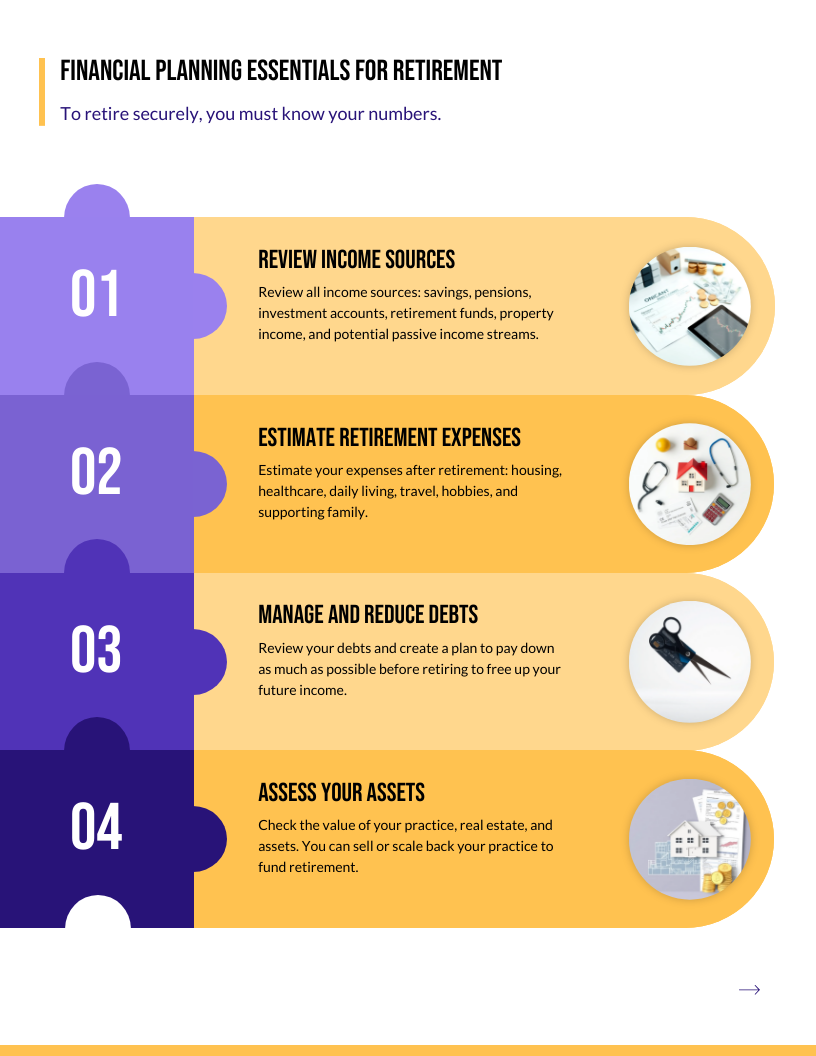
Review all income sources: savings, pensions, investment accounts, retirement funds, property income, and potential passive income streams.
Estimate expenses after retirement: housing, healthcare, daily living, travel, hobbies, supporting family.
Review debts: pay down as much as possible before retiring.
Check the value of your existing practice, real estate and assets. Sometimes, you can sell or scale back your practice to fund retirement.
Once you understand income and expenses you get clarity. Use that clarity to set realistic retirement goals.
How One Advisory Partners Helps You
Making financial decisions gets harder when investments, taxes, retirement income and long term goals all shift at the same time. Jordan Jensen helps you sort through these moving parts with a clear and steady process. His background in trading, portfolio construction and wealth management allows him to break down complex choices and guide you toward practical, informed decisions.
Jordan brings a mix of technical skill and strategic planning. He works with you to build an investment plan that fits your goals, map out retirement income, and identify tax smart ways to support your financial future. His approach focuses on clarity, long term thinking and advice you can trust.
You do not have to navigate these decisions alone. If you want guidance on growing your wealth, preparing for retirement or managing a major financial transition, schedule an appointment with Jordan Jensen at ONE Advisory Partners. He serves clients nationwide and helps you move forward with confidence and direction.
The Bottom Line
Retirement does not happen on its own. Lawyers who plan early protect their income, safeguard their practice and enter the next stage of life with confidence. The right plan helps you manage risk, close your practice responsibly, and build a clear picture of what life after law can look like. When you understand your options and start preparing now, you create a retirement that supports your goals, your finances and your well being.
Frequently Asked Questions About Lawyer Retirement Planning
1. Why do lawyers often delay retirement planning?
Many lawyers stay focused on client work and deadlines, feel tied to their professional identity, and avoid the uncertainty that comes with thinking about life after law.
2. What factors can force earlier retirement?
Health issues, market changes, declining client work, firm restructuring and burnout can all move retirement forward sooner than expected.
3. What age do most lawyers retire?
Most retire between 65 and 70, though about 14 percent continue working past 65 and some remain active into their 70s.
4. What are the first steps to start planning?
Create a list of interests, talk to retired lawyers and reflect on what gives you meaning outside your practice so you can build a clear direction for the next stage.
5. How can ONE Advisory Partners help with retirement planning?
Advisors like Jordan Jensen guide you through investment choices, retirement income planning and tax smart strategies so you can make confident decisions about your financial future.
Reference
ABA Journal Staff. (2025). Retiring Reluctantly: As Lawyers Age, Many Struggle With Exit Strategies. ABA Journal. Retrieved from https://www.abajournal.com/web/article/retiring-reluctantly-as-lawyers-age-many-struggle-with-exit-strategies
American Bar Association. (2007). Dignity After Sixty Five: Senior Lawyers and the Question of Retirement. ABA Bar Leader. Retrieved from https://www.americanbar.org/groups/bar-leadership/publications/bar_leader/2007_08/3206/dignity/
American Bar Association. (2024). Profile of the Legal Profession: Demographics. ABA. Retrieved fromhttps://www.americanbar.org/news/profile-legal-profession/demographics/