When Should You Claim Social Security For Retirement To Maximize Benefits?
When you should claim Social Security for retirement comes down to timing, not eligibility. You can claim as early as 62, but the decision you make locks in your income for life. Instead of one clear answer, you face tradeoffs. Claim early and receive smaller checks over a longer period. Wait and receive higher income later. The way this interacts with your investments, taxes, and longevity risk is where most people get it wrong.

7 Key Social Security Claiming Decisions That Influence Your Retirement Income
Here are the 7 key Social Security claiming decisions that impact your retirement income and how to approach them.
1. Build a Clear Strategy Before Claiming Early
You can start Social Security at age 62, but doing so reduces your monthly benefit permanently.
This decision works best when it is part of a broader income plan, not a default move. Once you claim, your benefit is locked in for life subject to two exceptions: your right to withdraw your application within the first twelve months if you pay your benefits back to Social Security and your right after your full retirement age to voluntarily stop your social security benefits to receive delayed retirement credits.
The Right Decision: If you have other income sources, consider delaying benefits. Use early retirement years to draw from investments while allowing your Social Security benefit to grow.
Read: What Are the 7 Tax Filing Mistakes Retirees Make That Cost the Most?
2. Use Full Retirement Age as Your Baseline
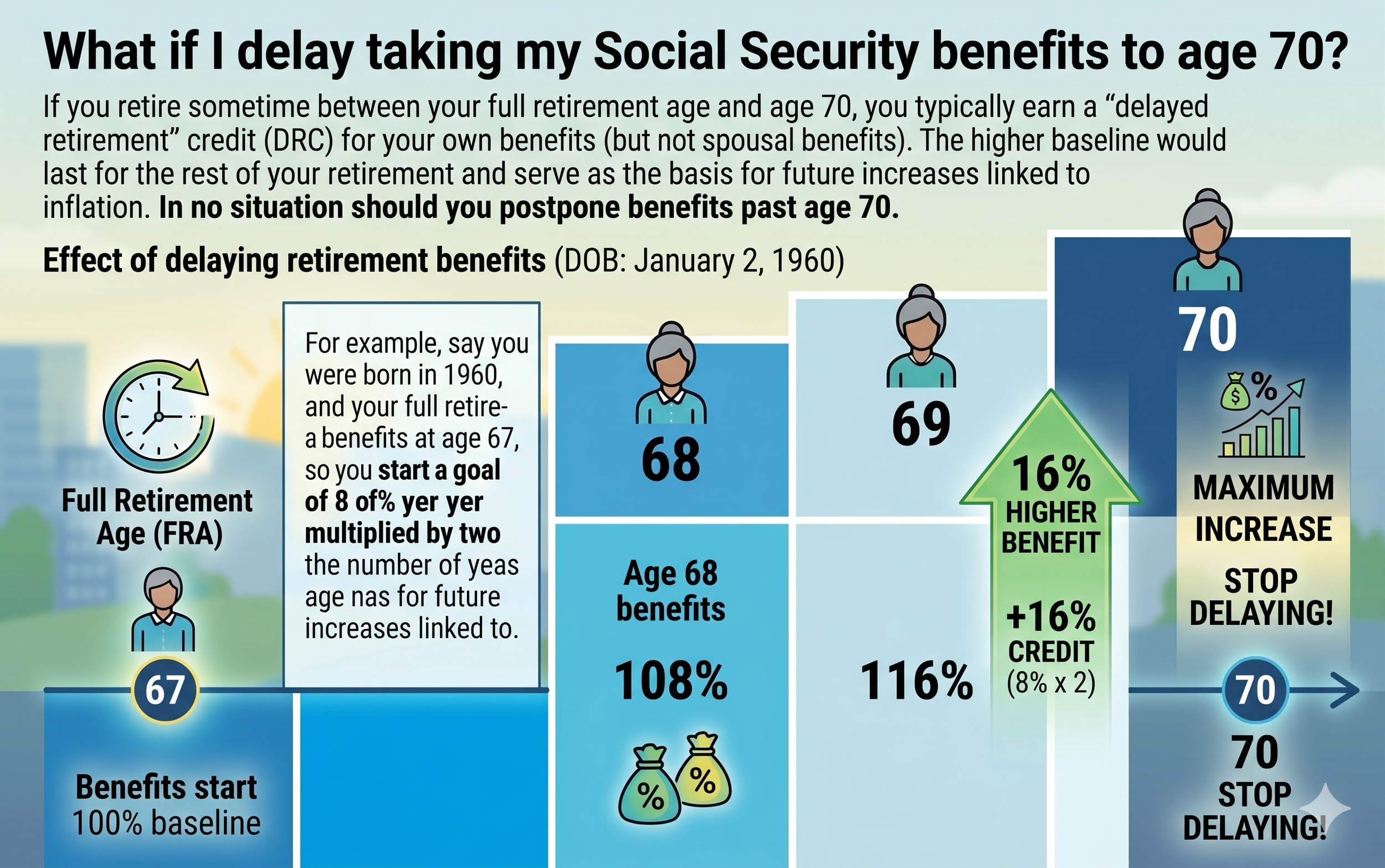
Full retirement age is when you qualify for 100% of your benefit. For most people today, that falls between age 66 and 67.
This is your reference point. Every decision before or after this age should be intentional and tied to your overall plan.
The Right Decision: Know your full retirement age and use it as your baseline when comparing early versus delayed claiming strategies.
3. Take Advantage of Delayed Credits Up to Age 70
Each year you delay past full retirement age increases your benefit by about 8% until age 70.
This creates a steady increase in guaranteed income, which becomes more valuable later in retirement.
The Right Decision: Evaluate delaying benefits as part of your income strategy. For high net worth households, this often strengthens long-term income stability.
Also read: How Social Security Works After Your Spouse Dies
4. Strengthen Your 35-Year Earnings Record
Social Security is based on your 35 highest earning years, adjusted for inflation.
Gaps or lower-earning years can reduce your average, which directly affects your benefit.
The Right Decision: Review your earnings history. If possible, extend working years or increase income in later years to replace lower-earning periods.
5. Plan Your Claim Around Ongoing Work
If you claim before full retirement age and continue working, your benefits may be reduced if your income exceeds certain limits.
This does not mean the benefit is lost, but it can affect your short-term cash flow.
The Right Decision: If you plan to continue working, consider delaying benefits until full retirement age to simplify your strategy and avoid temporary reductions.
6. Manage the Tax Impact of Your Benefits
Social Security is not always tax-free. Your benefits can become taxable depending on your total income.
Withdrawals from retirement accounts, investment income, and part-time earnings all interact with this calculation.
The Right Decision: Coordinate withdrawals across accounts. Manage total income levels to control how much of your Social Security becomes taxable.
7. Align Your Strategy With Your Spouse
For married couples, Social Security decisions work best when coordinated.
One spouse’s benefit can directly affect the other, especially when it comes to survivor income.
The Right Decision: Align claiming strategies. In many cases, one spouse delays to maximize the long-term benefit while the other provides earlier income.
Also read: 8 Reasons Virtual Family Offices Are Becoming Essential For Modern Wealth Management
How Do You Maximize Your Monthly Social Security Benefit?
Reaching the maximum Social Security payout comes down to two variables: how much you earn and when you claim.
Earnings Your benefit is based on your top 35 earning years. To reach the highest payout:
Earn at or near the Social Security wage cap over time
Replace low earning years if you are still working
Avoid gaps that bring down your average
If your earnings fall short, your benefit does too.
Timing When you claim determines how much you receive each month:
Claim early and your benefit is reduced for life
Claim at full retirement age to receive your baseline amount
Delay to age 70 to reach your maximum monthly benefit
The Right Decision
Review your earnings record for gaps
Increase income in later years if possible
Use other assets early so you can delay claiming
Focus on locking in higher guaranteed income later
The highest payout comes from doing both well: strong earnings over time and delaying your claim as long as possible.
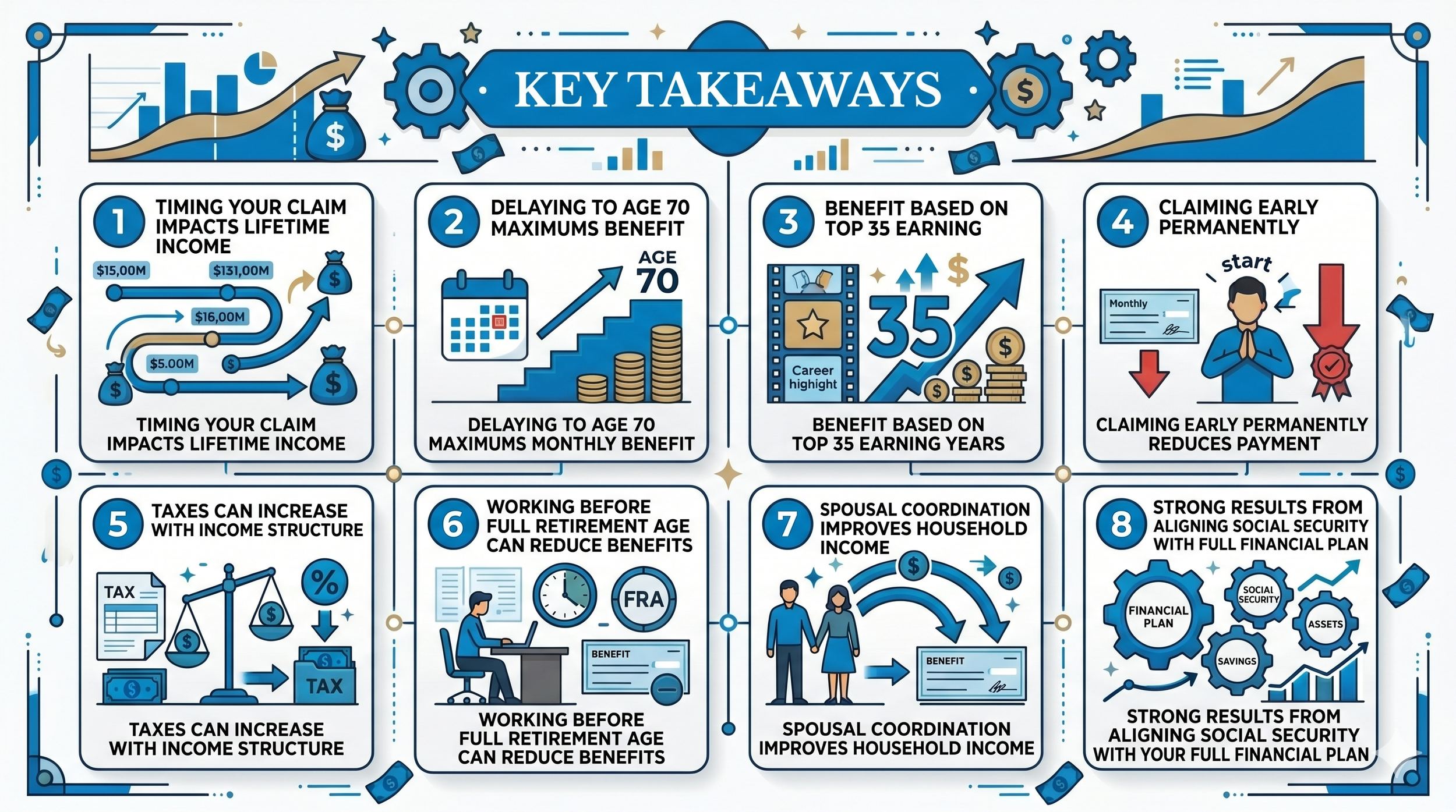
Key Takeaways
Why A Virtual Family Office Works
Social Security claiming does not exist in isolation. It connects to your investment strategy, tax planning, and long-term income needs.
A Virtual Family Office brings all of these moving parts into one coordinated plan. Instead of making decisions in silos, every choice works together. Your claiming strategy aligns with when you withdraw from accounts, how you manage taxes, and how you structure income over time.
This matters most as your financial life becomes more complex. The value is not just in making the right decision. It is in making sure every decision supports the same outcome.
Also read: What Is Virtual Family Office and Why More Families Are Moving to It
How ONE Advisory Partners Can Help You
At ONE Advisory Partners, the focus is not just on when to claim Social Security. The focus is on how that decision fits into your full financial picture.
Through a Virtual Family Office approach, your income plan, tax strategy, and investment decisions are coordinated from the start. This allows you to evaluate claiming decisions in context, not in isolation. Timing, taxes, and long-term income are all considered together.
If you are serious about getting this right, the goal is simple. Make each decision with a clear plan behind it, not just a single calculation.
Bottom Line
When you should claim Social Security for retirement is not about picking an age. It is about how that decision fits into your full financial plan.
The right approach balances income today with income later, while managing taxes, longevity risk, and portfolio withdrawals. When those pieces work together, the outcome improves.
FAQs
When should you claim Social Security to maximize monthly benefits?
At age 70. Your benefit increases each year after full retirement age until you reach 70, then stops increasing. Delaying allows you to lock in the highest possible monthly income, which can provide more stability later in retirement.
Is it better to take Social Security at 62 or wait?
Waiting usually results in higher lifetime income, especially if you live longer. Claiming at 62 reduces your monthly benefit permanently. The right decision depends on your income needs, health, and overall financial plan.
How much does Social Security increase if you wait?
Your benefit increases by about 8% per year after full retirement age until age 70. This increase is built into the system and can significantly raise your guaranteed income over time.
Is Social Security based on your last working years?
No. It is based on your 35 highest earning years, adjusted for inflation. If you have fewer than 35 years of earnings, lower or zero income years are included, which reduces your overall benefit.
Can Social Security be taxed?
Yes. Depending on your total income, a portion of your benefits may be taxable. Withdrawals from retirement accounts, investment income, and other earnings can all increase how much of your Social Security is subject to taxes.
Reference
Investopedia. (n.d.). 5 tips to increase your Social Security check. Retrieved from https://www.investopedia.com/articles/retirement/081616/5-tips-increase-your-social-security-check.asp
Social Security Administration. (n.d.). Retirement benefits. Retrieved from https://www.ssa.gov/retirement
Social Security Administration. (2021). Anytime is the right time to save for your future (Publication No. 05-10549). Retrieved from https://www.ssa.gov/benefits/assets/materials/retirement/EN-05-10549.pdf
Social Security Administration. (2025). Learn what you can do with my Social Security (Publication No. 20-014). Retrieved from https://www.ssa.gov/marketing/assets/materials/EN-20-014.pdf
Charles Schwab. (n.d.). Guide on taking Social Security. Retrieved from https://www.schwab.com/learn/story/guide-on-taking-social-security