What Does A Virtual Family Office Do And Who Actually Needs One?
A Virtual Family Office helps you manage your entire financial life as one coordinated strategy. Instead of handling investments, taxes, estate planning, and insurance separately, it connects them into one plan that works together.
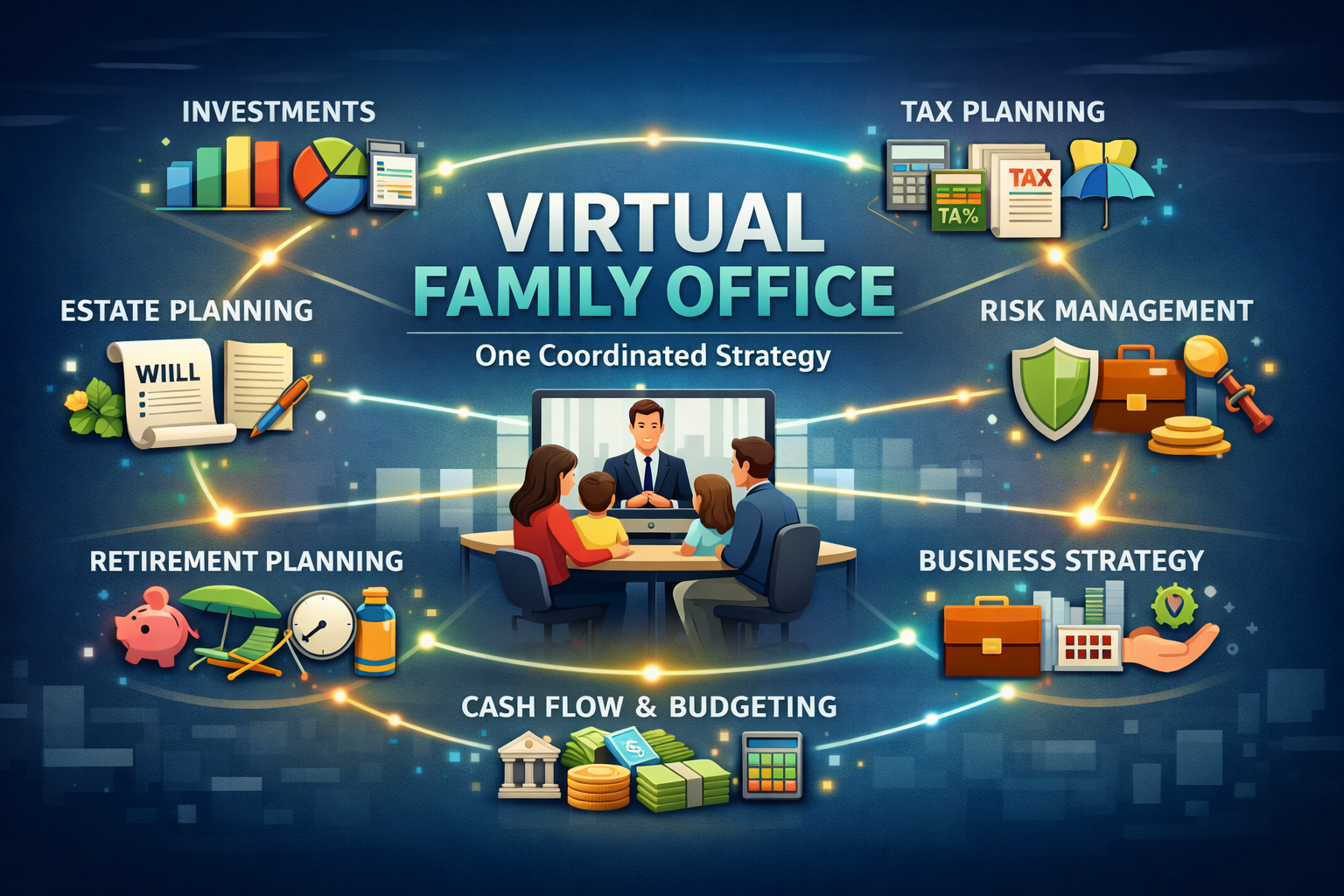
If you are nearing retirement or managing significant assets, small gaps between advisors can turn into costly mistakes. A Virtual Family Office solves that by aligning every decision.
What Is A Virtual Family Office?
A Virtual Family Office (VFO)is a service model that coordinates all areas of your finances.
It focuses on integration.
Simple definition: A Virtual Family Office connects investments, tax planning, retirement income, and estate strategy into one unified plan.
Unlike traditional firms that focus on portfolio performance, a VFO looks at how each decision affects your overall financial outcome.
What Does A Virtual Family Office Actually Do?
A Virtual Family Office manages five core areas. Each one is connected.
1. Investment Management
A VFO manages your investments with a broader objective.
It aligns your portfolio with:
Retirement income needs
Tax strategy
Risk tolerance
Long-term goals
This avoids disconnected decisions that may look good short term but create issues later.
Also read: How Asset Location Changes When You Shift From Properties To Portfolios
2. Tax Planning Coordination
Tax planning is not a once a year activity.
A VFO coordinates with your tax professional to:
Reduce taxable income
Plan withdrawals across accounts
Time capital gains
Use tax efficient investment strategies
This approach helps reduce unnecessary tax exposure over time.
3. Retirement Income Planning
Retirement shifts your focus from growth to income.
A VFO builds a structured plan that:
Sequences withdrawals
Balances taxable and tax deferred accounts
Adjusts income based on market conditions
Plans required minimum distributions
This creates consistency instead of uncertainty.
4. Estate Planning Coordination
Estate planning often exists separately from your investments.
A VFO connects both.
It works with your attorney to:
Align beneficiaries
Structure asset transfers
Reduce potential tax impact
Keep documents updated
This avoids conflicts between legal plans and financial accounts.
5. Risk And Insurance Review
Risk can disrupt long-term plans.
A VFO reviews:
Life insurance coverage
Long-term care planning
Liability exposure
Income protection
The goal is to identify gaps before they become problems.
What Additional Services Can A VFO Include?
Some Virtual Family Offices offer expanded support.
This may include:
Consolidated financial reporting
Asset tracking across accounts
Document organization
Ongoing advisor coordination
You get a clearer view of your finances in one place.
Short answer: A VFO can centralize reporting, tracking, and coordination across all financial areas.
Why Does Coordination Matter?
Many families already have a financial team.
You may have:
A financial advisor
A tax professional
An estate attorney
The issue is they often work independently.
This leads to:
Conflicting recommendations
Missed tax opportunities
Inefficient strategies
Decisions made without full context
A Virtual Family Office brings these professionals into one aligned strategy.
Short answer: Coordination reduces errors and keeps all financial decisions working together.
How Is A Virtual Family Office Different From A Traditional Firm?
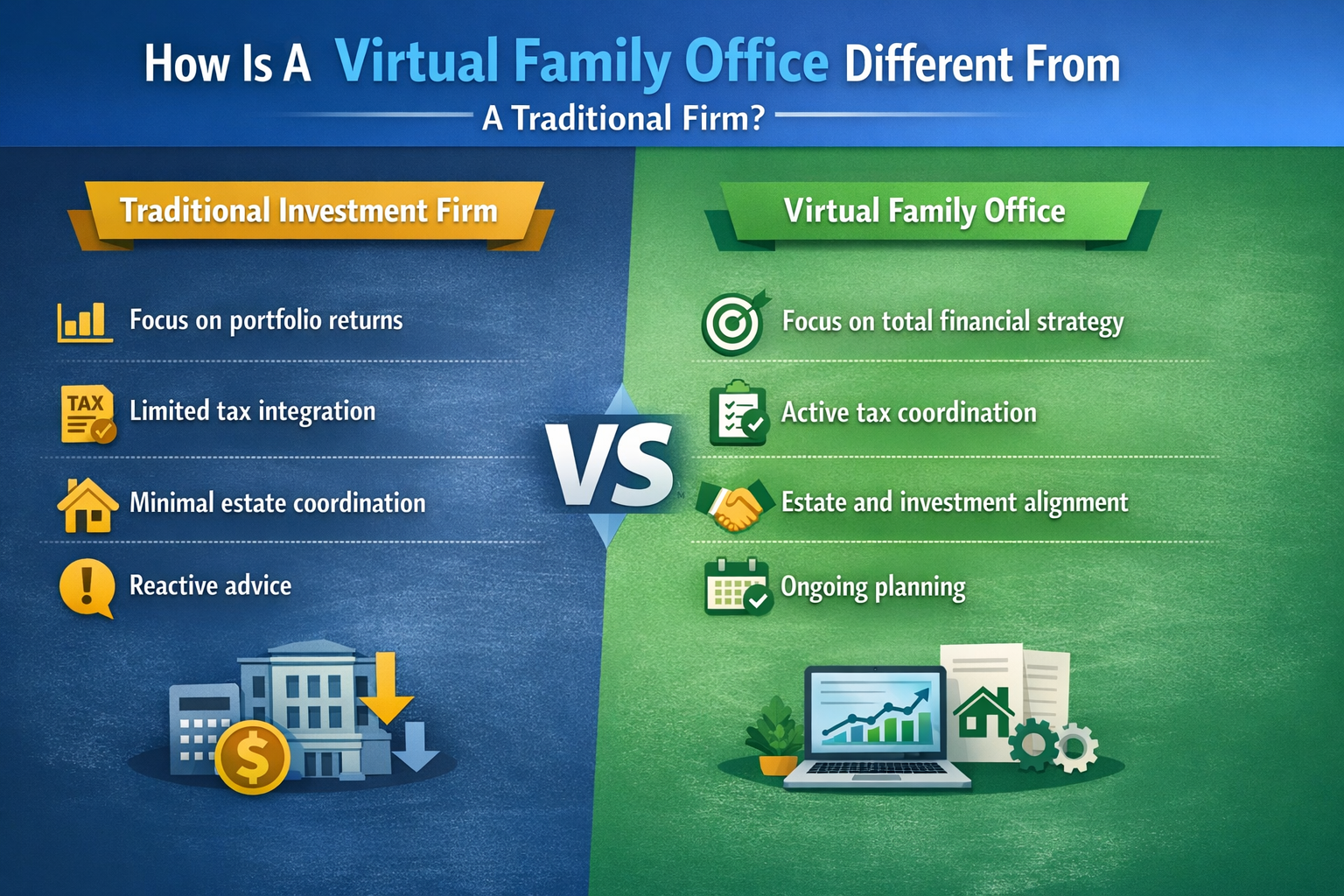
Traditional Investment Firm
Focus on portfolio returns
Limited tax integration
Minimal estate coordination
Reactive advice
Virtual Family Office
Focus on total financial strategy
Active tax coordination
Estate and investment alignment
Ongoing planning
Read: What To Look For In A Fiduciary Retirement Advisor
Short answer: A traditional firm manages investments. A VFO manages your entire financial picture.
Who Should Consider A Virtual Family Office?
A Virtual Family Office is designed for individuals with more complex financial needs.
You may benefit if you:
Have $2M or more in investable assets
Are nearing or in retirement
Own a business or plan to sell one
Work with multiple advisors
Want better coordination across decisions
These situations require more than basic investment management.
Short answer: A VFO is best suited for individuals who need integrated financial planning.
What Problems Does A Virtual Family Office Solve?
A Virtual Family Office focuses on closing planning gaps.
Common Issues It Addresses
Advisors not communicating
Tax strategies missed
Retirement income unclear
Estate plans not aligned
Financial decisions made in isolation
Over time, these gaps can affect your long-term outcomes.
Short answer: A VFO solves inefficiencies caused by disconnected financial advice.
Also read: 7 Common Financial Blind Spots for High Earners
How Does A Virtual Family Office Work?
A Virtual Family Office follows a structured process.
Step 1: Full Financial Review
The process starts with a complete review of your financial life.
This includes:
Investment accounts
Tax returns
Estate documents
Insurance policies
This creates a full picture before planning begins.
Step 2: Strategy Alignment
Next, all areas are connected.
This includes:
Investment strategy
Tax planning
Income planning
Estate structure
Each decision is reviewed in relation to the others.
Step 3: Advisor Coordination
A VFO works directly with your:
Tax Professional
Attorney
Other advisors
This keeps communication consistent and aligned.
Step 4: Ongoing Adjustments
Your financial plan evolves.
A VFO adjusts based on:
Market conditions
Tax law changes
Life events
Retirement transitions
Short answer: A VFO builds, coordinates, and continuously updates your financial strategy.
What Makes A Virtual Family Office Valuable?
The value comes from integration.
Key Benefits
Improved tax efficiency
Clear retirement income strategy
Better coordination across advisors
Reduced planning gaps
One consistent financial direction
Instead of managing separate parts, everything works together.
Short answer: A VFO improves outcomes by aligning all financial decisions into one plan.
How Does A VFO Improve Tax Efficiency?
Tax efficiency is a major advantage.
A Virtual Family Office:
Coordinates withdrawals across accounts
Manages capital gains timing
Uses tax aware strategies
Aligns tax planning with estate goals
This reduces unnecessary tax exposure over time.
Short answer: A VFO improves tax efficiency by integrating tax strategy into every financial decision.
Also read: Are You Missing Key Family Tax Opportunities?
How Does A VFO Support Retirement Planning?
Retirement planning requires structure.
A Virtual Family Office:
Builds income strategies
Plans withdrawal sequencing
Adjusts for market changes
Coordinates income sources
This creates more predictable financial outcomes.
Short answer: A VFO helps convert your assets into a stable retirement income plan.
What Is The Difference Between A Family Office And A Virtual Family Office?
A traditional family office is:
In-house
Expensive
Designed for ultra high net worth families
A Virtual Family Office offers similar coordination using external professionals.
It delivers structure without the cost of a full internal team.
Short answer: A Virtual Family Office provides family office level coordination without the overhead.
Is A Virtual Family Office Worth It?
It depends on your financial complexity.
If your finances are simple, you may not need this level of coordination.
If you have:
Multiple accounts
Multiple advisors
Tax exposure
Estate planning needs
Then a coordinated approach can improve outcomes.
Short answer:A VFO is worth it when complexity creates gaps that need alignment.
How Do You Know If Your Financial Plan Has Gaps?
Ask yourself:
Do my advisors communicate regularly?
Is my tax strategy aligned with my investments?
Do I have a clear retirement income plan?
Are my estate documents consistent with my accounts?
If the answer is no to any of these, there may be gaps.
Short answer: Gaps exist when financial decisions are not connected.
Frequently Asked Questions About A Virtual Family Office
What Does A Virtual Family Office Do In Simple Terms?
It connects your investments, taxes, retirement planning, and estate strategy into one plan.
Is A Virtual Family Office Only For The Ultra Wealthy?
No. It is often used by individuals with $2M or more who need coordinated planning.
Can A Virtual Family Office Replace My Current Advisors?
It does not always replace them. It coordinates them into one strategy.
How Is A VFO Different From A Financial Advisor?
A financial advisor often focuses on investments. A VFO manages your entire financial life.
Does A VFO Help With Taxes?
Yes. It works with your CPA to improve tax efficiency across all decisions.
Bottom Line
A Virtual Family Office brings structure to complexity. It connects investments, taxes, retirement income, and estate planning into one coordinated strategy.
If your financial life involves multiple moving parts, alignment becomes more important than individual advice. ONE Advisory Partners works with individuals and families to coordinate these decisions into one clear plan. You can explore how this approach may fit your situation.